Your body has patterns that follow an approximately 24-hour cycle. Light is one of the cues that helps keep those patterns in step with the world around you.
What is a circadian rhythm?
Circadian rhythms are daily patterns in the way the body works, including changes in sleepiness and wakefulness. They are part of a biological timing system, rather than a schedule you switch on with one product.
Why light matters
According to the US National Institute of General Medical Sciences, light and darkness have the biggest influence on circadian rhythms. Food intake, activity, stress and other factors also play a part.
That makes the timing of light relevant. A bright lamp is not simply a stronger version of a bedside light, and a routine that suits one person may not suit another.
Give your routine a practical place
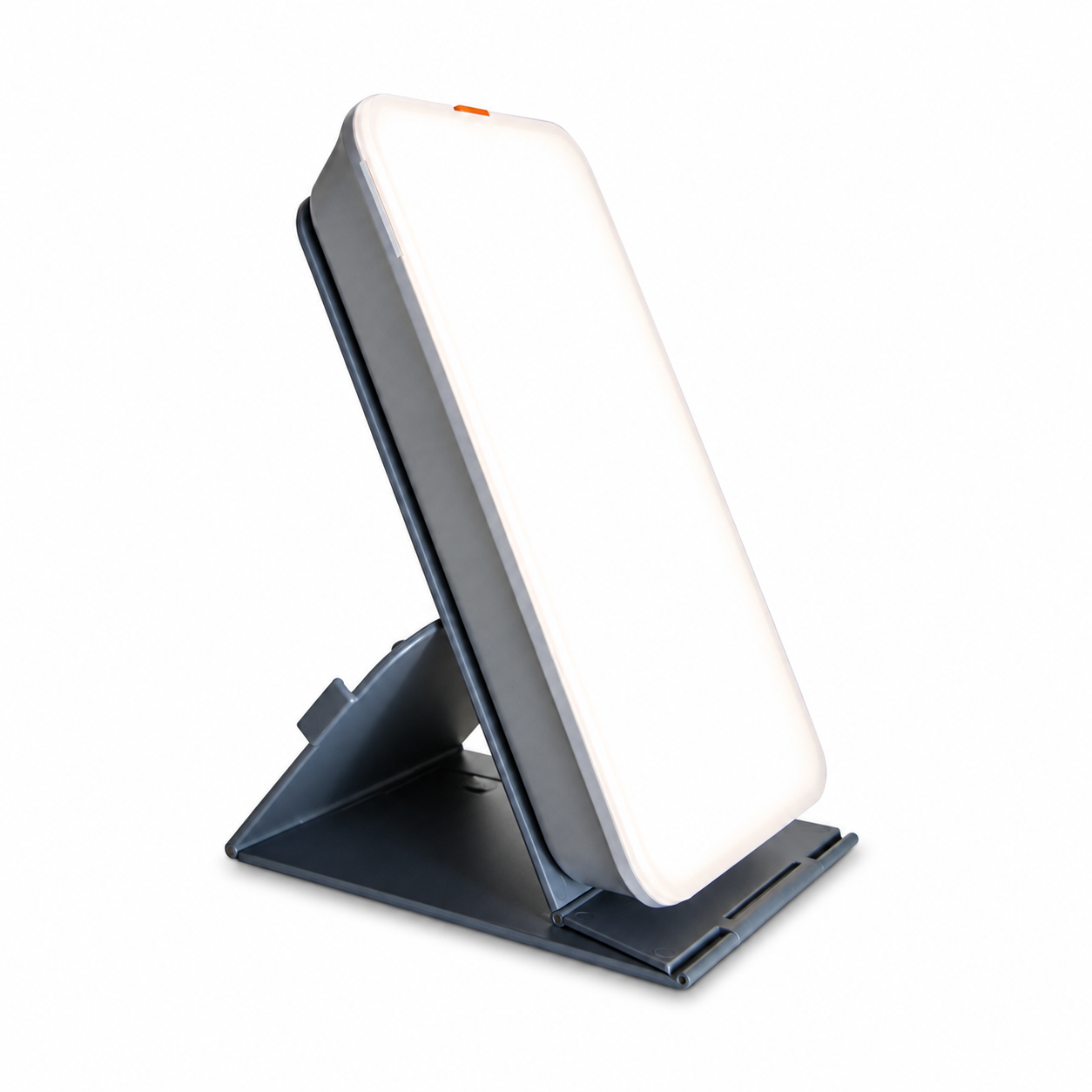
Start by thinking about a moment you can repeat: breakfast, a few pages of a book or planning your day. If you use a bright-light lamp, choose a stable surface near a suitable socket and follow its instructions for distance and positioning.
Consistency should fit your life. A lamp is one part of the environment around your routine; it is not a promise of better sleep or a substitute for individual advice.
Keep the purpose clear
A bright-light lamp and a sunrise alarm serve different purposes. A sunrise alarm gradually changes the light before a planned wake-up time. Rise and Mini are lamps you switch on for use while awake; neither is a sunrise alarm clock.
If you are seeking help for a sleep condition or considering light treatment, ask a qualified clinician about timing and suitability. This introduction is general education, not a personalised treatment schedule.
The DAYARC approach ↗Source: National Institute of General Medical Sciences: Circadian Rhythms. Reviewed 9 September 2026.