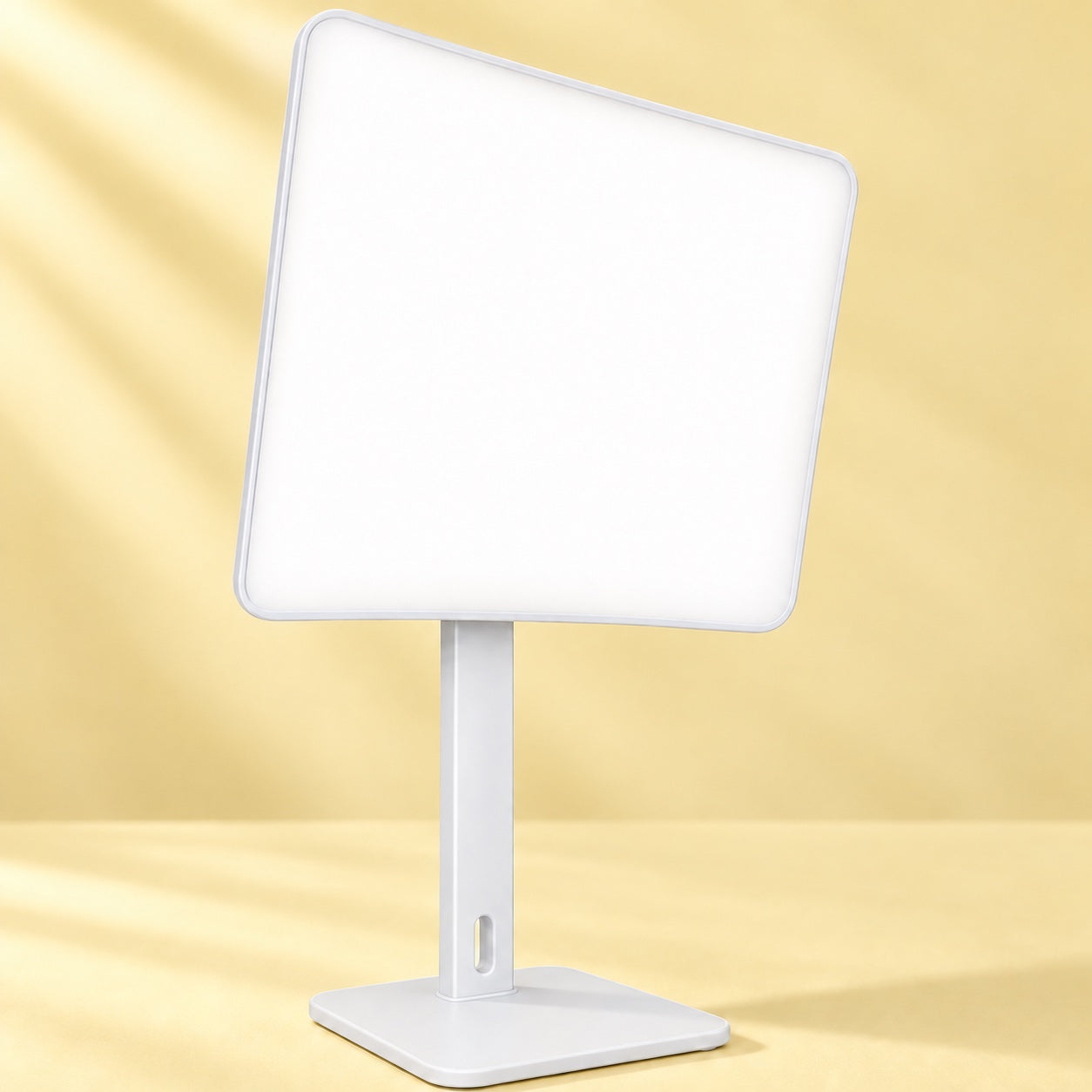
 YOUR MORNING, AT HOME↗
Rise
Full-size bright lightA generous panel. A considered daily ritual.
£199.00 GBP
Discover Rise ↗THE MORNING LIGHT COLLECTION
Two bright-light lamps. Two ways to make room for a regular morning ritual. Find the one that fits your space, then explore the science behind the daily signal.
YOUR MORNING ESSENTIALS
A place at home.
A companion for elsewhere.
YOUR MORNING, AT HOME↗A generous panel. A considered daily ritual.
£199.00 GBP
Discover Rise ↗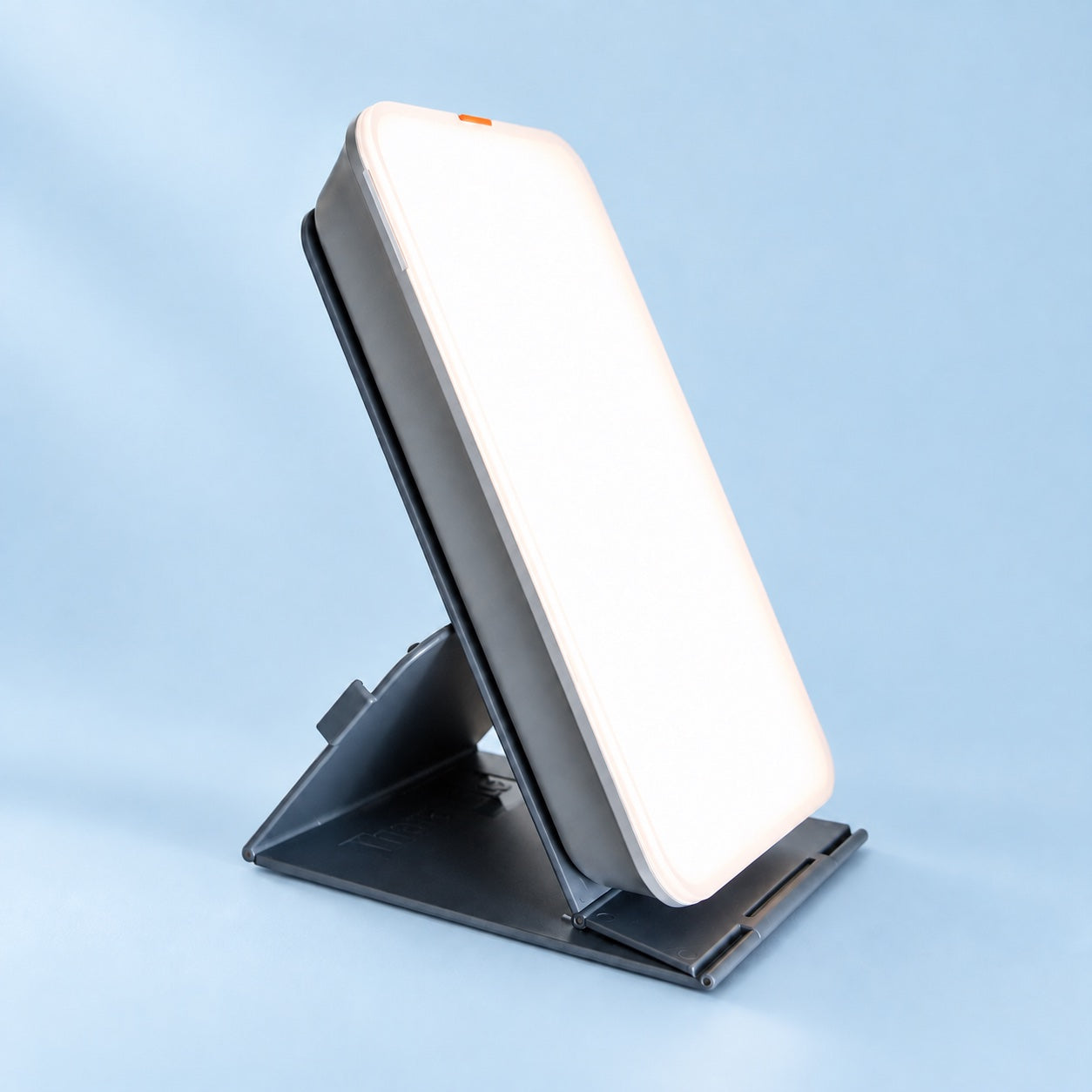 YOUR MORNING, WHEREVER YOU LAND↗
Folds away. Fits into your day.
£49.99 GBP
Discover Mini ↗START WITH YOUR SPACE
Both lights are mains powered. Choose the format and controls that fit your routine.
THE SCIENCE OF YOUR DAILY RHYTHM
Light does more than help you see. It is one of the signals your body uses to tell the time.
Circadian rhythms are the roughly 24-hour patterns that influence sleep, hormones and other body functions. Light and darkness help keep these rhythms aligned with day and night.
Source: NIGMS ↗Light reaching your eyes sends information to the brain’s central clock. Your light environment is part of your daily rhythm—not simply the brightness of a room.
Source: NIGMS ↗Bright-light therapy is used for winter-pattern seasonal affective disorder. The NHS notes that some people find it helpful, while evidence for its effectiveness remains limited. Results are not guaranteed.
Source: NHS ↗Our starting point: understand your body’s rhythm, and make light a considered part of your routine. This research explains the principles; it is not a clinical trial of DAYARC products.
Explore light & your rhythm ↗TWO LIGHTS. YOUR CALL.
Start with where you’ll use it.
| The details | Rise | Mini |
|---|---|---|
| Made for | A regular place at home | Smaller spaces & days away |
| 10,000 lux at¹ | 30–36 cm | 25 cm |
| Brightness settings | 4 | 1 |
| Built-in timer | 15 / 30 / 45 / 60 min | No |
| Stand | Adjustable height & angle | Folding protective stand |
| Power | Mains powered | Mains powered |
| Explore | Meet Rise ↗ | Meet Mini ↗ |
¹ Manufacturer-rated light output at the stated distance. Brightness decreases as you move farther away.