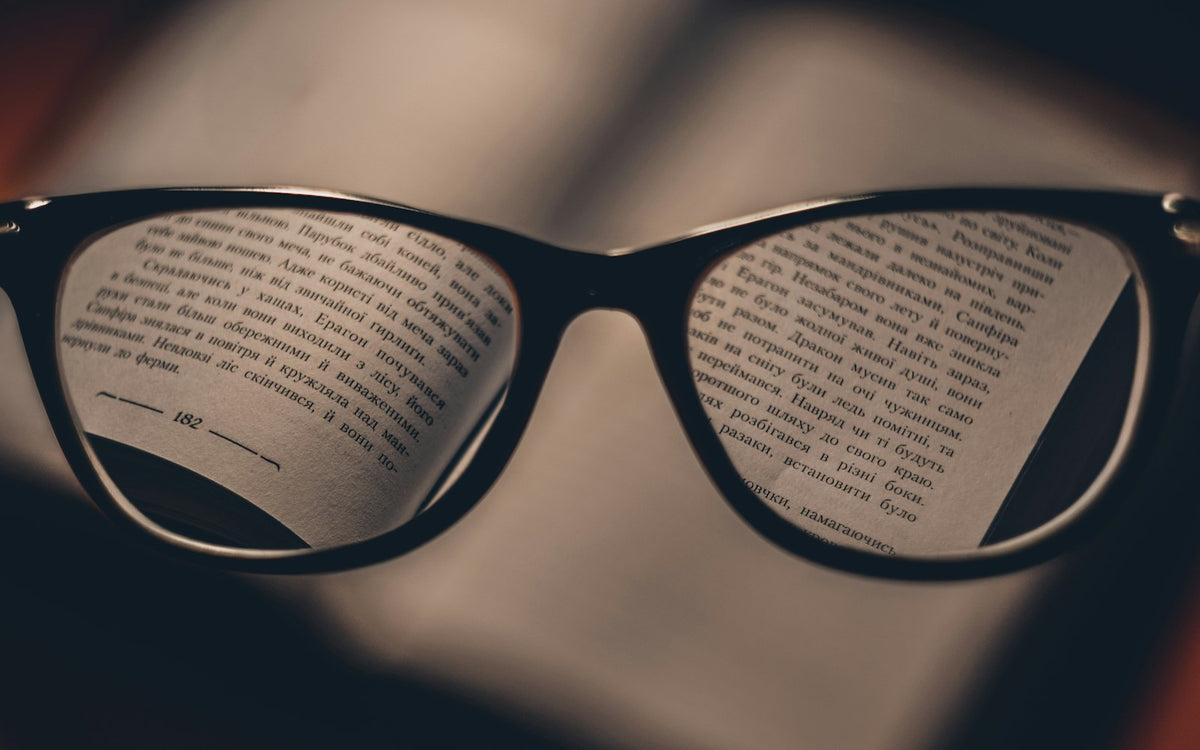
Light therapy glasses put a small light source a few centimetres from your eyes, so they can run at 500 to 2,000 lux and still deliver a meaningful dose while you move around; a SAD lamp is a fixed panel rated at 10,000 lux at a stated distance, which is the protocol most of the research used. Glasses win on freedom, lamps win on evidence, and the one head-to-head trial so far found the two comparable over a single morning session.
What are light therapy glasses?
A frame, usually worn like ordinary glasses, with small LEDs that shine light towards the eyes from just above or beside the line of sight. Because the light source is so close, the illuminance at the eye can be reasonably high even though the LEDs are small and dim compared with a panel. The wearer can make breakfast, read or work while the session runs, which is the whole appeal. Some models use white light; others use blue-enriched light on the basis that the eye's body-clock receptors are most sensitive to that part of the spectrum.
What is a SAD lamp?
A panel, sometimes called a light box, that you sit near for a fixed period. The research standard is 10,000 lux at a stated distance for about 30 minutes soon after waking, a figure with a specific history that where does the 10,000 lux standard come from? explains. The panel stays on the table; you come to it. DAYARC Rise is rated at 10,000 lux at approximately 30–36 cm and DAYARC Mini at approximately 25 cm.
How do they compare?
| Light therapy glasses | SAD lamp (light box) | |
|---|---|---|
| Typical intensity at the eye | About 500–2,000 lux | 10,000 lux at the rated distance |
| Where the light comes from | LEDs a few centimetres from the eye | A panel 25–60 cm away, depending on the model |
| Session | Usually 20–45 minutes, while moving about | Usually 20–30 minutes, seated |
| Evidence base | A small number of studies, mostly short and small | Decades of trials; a modest average benefit for SAD in meta-analysis |
| Dose control | Fixed by the device; not affected by how you sit | Depends on sitting at the rated distance |
| Sharing | One person at a time | A large panel can serve two people at a table |
| Glasses wearers | Some models fit over prescription glasses, some do not | Ordinary glasses are fine |
What does the research say about glasses?
Not much yet, and what exists is small. A 2019 study in Scientific Reports by Comtet and colleagues compared a 10,000 lux light box with 2,000 lux blue-enriched glasses in 18 volunteers after a night without sleep. Thirty minutes of either device at 5 am improved sleepiness and sustained attention at 7 am, with effects the authors described as comparable between the two, and both were well tolerated. That is one morning, in sleep-deprived healthy adults, with 18 people; it says nothing about seasonal depression over a winter.
A 2021 review of wearable light therapy in Chronobiology in Medicine made the same two points: light boxes emit at least 10,000 lux while glasses emit around 500 to 2,000 lux, and only a few studies have compared the two directly. The evidence for SAD lamps, summarised in do SAD lamps work?, is older and larger, though still not strong enough for the NHS to offer light therapy routinely.
Which should you choose?
If the only way you will do a session is on the move, glasses solve the consistency problem, and consistency matters more than any other variable. If you can sit at a table for 20 to 30 minutes with breakfast, a lamp gives you the protocol the research actually tested and lets you control the dose by where you sit. On price, glasses generally cost more than a compact lamp and about the same as a full-size panel, so cost is rarely the deciding factor.
Whichever you pick, the NHS advice is the same: choose a UV-free device, follow the manufacturer's instructions and speak to a GP first if you have an eye condition or take medicines that increase your sensitivity to light. Are SAD lamps safe? goes through the eye and UV questions in detail.
Frequently asked questions
Are 2,000 lux glasses as strong as a 10,000 lux lamp?
Nobody can say precisely, because the dose that reaches the retina depends on distance, angle and how wide your eyes are open, not just the headline figure. The glasses sit far closer, which is why a lower number can still be meaningful. The one direct comparison found similar short-term effects on alertness; long-term comparisons do not exist yet.
Can I use light therapy glasses in bed?
You can, but the point of morning light is to mark the start of the day for your body clock, and lying in a dark room sends the opposite message. Most people do better wearing them at breakfast or while getting ready.
Can I use a SAD lamp while wearing my normal glasses?
Yes. Ordinary prescription lenses let the light through; sunglasses and strongly tinted lenses do not. Can you use a SAD lamp with glasses, contact lenses or after laser eye surgery? has the details.
Where does this leave you?
Glasses are a sensible option for people who cannot sit still in the morning, with an evidence base that is promising but thin. A lamp is the tested tool, provided you sit at the rated distance and use it most days. If you go the lamp route, DAYARC Rise vs DAYARC Mini explains the difference between a full-size panel and a compact one, and the choose your light page puts the specifications side by side.
About DAYARC
DAYARC is a new UK circadian rhythm startup. We make two bright-light lamps for the morning: DAYARC Rise (£199), a full-size lamp rated at 10,000 lux at approximately 30–36 cm, with four brightness settings, a 15 to 60-minute timer and adjustable height and angle; and DAYARC Mini (£49.99), a compact lamp rated at 10,000 lux at approximately 25 cm, with a folding stand that doubles as its cover. Both use UV-free LEDs and run from the mains. We publish plain specifications with the measuring distance, we do not make medical claims, and we write the DAYARC Journal to help people build a simple morning light routine around their own daily rhythm. You can read more about how we think on our approach page or compare the two lamps.
This article is general information, not medical advice. Check with a GP or qualified healthcare professional before using bright light if you have an eye condition, a condition affected by bright light such as bipolar disorder, or take medicines that increase your sensitivity to light. If you have persistent low mood or think you may have depression, speak to your GP. If you need urgent help, contact NHS 111, or call 999 in an emergency.
Sources
- Comtet H. et al. (2019). Light therapy with boxes or glasses to counteract effects of acute sleep deprivation. Scientific Reports, 9, 18073
- Lee J., Lee J. and Kim S. J. (2021). Current and Future Perspectives on Light Therapy Using Wearable Devices. Chronobiology in Medicine, 3(3), 92–96
- NHS: Seasonal affective disorder (SAD)
- Terman J. S. et al. (1990). Efficacy of brief, intense light exposure for treatment of winter depression. Psychopharmacology Bulletin, 26(1), 3–11