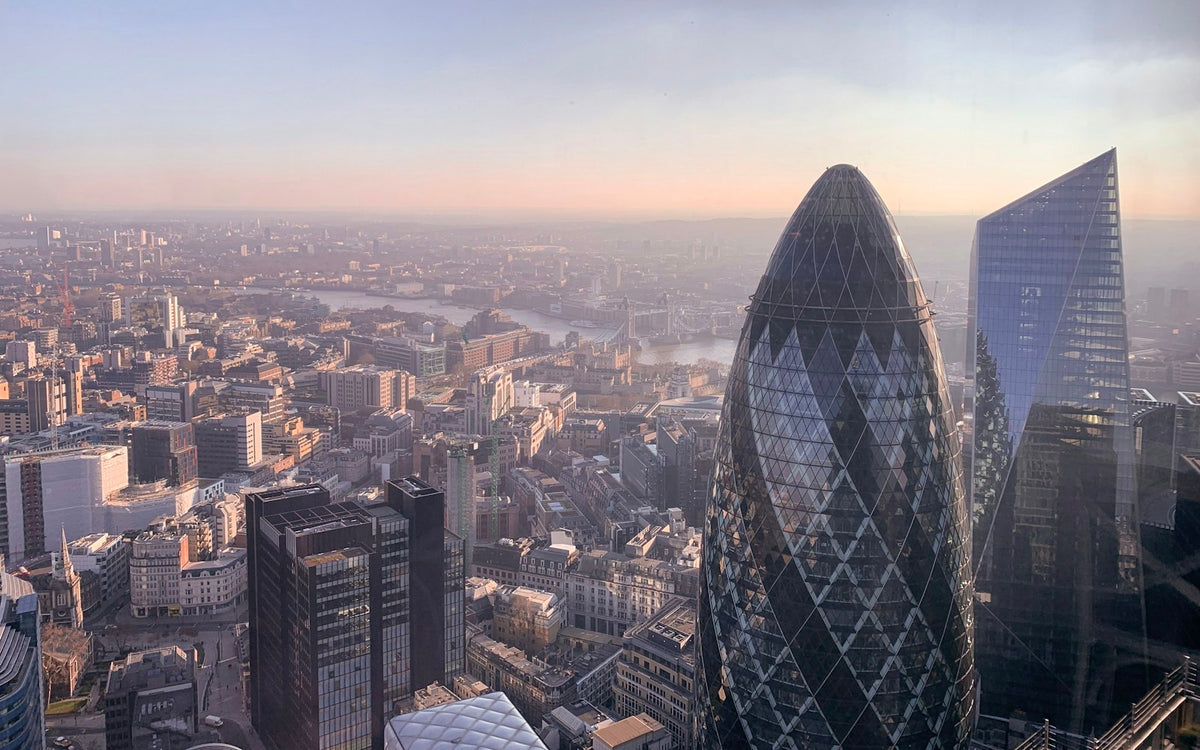
On the shortest day, 21 December 2026, the sun rises at 08:04 in London, 08:16 in Cardiff, 08:29 in Newcastle, 08:44 in Belfast and 08:57 in Inverness, and London gets almost an hour and a quarter more daylight than Inverness. Where you live in the UK changes how dark your winter mornings are far more than most people realise, and it changes when a morning light routine starts to make sense. Here are the numbers.
Sunrise and sunset on the shortest day
The winter solstice falls on Monday 21 December 2026, at 8.50 pm GMT according to the Royal Observatory Greenwich, and it is the day with the fewest hours of daylight everywhere in the UK. The times below are calculated from standard astronomical formulae for the city centre and rounded to the minute; the US Naval Observatory's calculator gives the same figures to within a minute.
| City | Sunrise | Sunset | Daylight |
|---|---|---|---|
| Plymouth | 08:14 | 16:14 | 8 h 00 min |
| Cardiff | 08:16 | 16:05 | 7 h 49 min |
| London | 08:04 | 15:53 | 7 h 48 min |
| Birmingham | 08:16 | 15:54 | 7 h 38 min |
| Norwich | 08:04 | 15:41 | 7 h 37 min |
| Manchester | 08:23 | 15:50 | 7 h 27 min |
| Leeds | 08:22 | 15:46 | 7 h 23 min |
| Belfast | 08:44 | 15:58 | 7 h 14 min |
| Newcastle | 08:29 | 15:39 | 7 h 09 min |
| Glasgow | 08:46 | 15:44 | 6 h 57 min |
| Edinburgh | 08:42 | 15:39 | 6 h 56 min |
| Aberdeen | 08:46 | 15:26 | 6 h 39 min |
| Inverness | 08:57 | 15:32 | 6 h 34 min |
| Lerwick | 09:08 | 14:56 | 5 h 48 min |
Two patterns explain the table. Latitude sets the length of the day: the further north, the shorter it is, from eight hours in Plymouth to under six in Shetland. Longitude sets the clock time: everywhere in the UK runs on GMT, but the sun reaches Norwich before it reaches Cardiff, so a city in the west sees both sunrise and sunset later than a city in the east at the same latitude. Belfast and Newcastle are at almost the same latitude, but Belfast's sunrise is a quarter of an hour later because it is 280 km further west.
How many mornings start in the dark?
For most people the question is not the solstice but the commute. The table below counts the mornings on which the sun is still below the horizon at 8 am, and separately at 7 am, through the 2026–27 winter.
| City | Sunrise after 8 am | Sunrise after 7 am |
|---|---|---|
| London | 15 December to 14 January (31 mornings) | Until 22 February, apart from a short spell after the clocks change |
| Cardiff | 4 December to 26 January (54 mornings) | Until 28 February |
| Birmingham | 5 December to 25 January (52 mornings) | Until 26 February |
| Manchester | 30 November to 28 January (60 mornings) | Until 28 February |
| Newcastle | 27 November to 30 January (65 mornings) | Until 27 February |
| Glasgow | 19 November to 7 February (81 mornings) | Until 4 March |
| Belfast | 19 November to 8 February (82 mornings) | Until 6 March |
| Inverness | 15 November to 9 February (87 mornings) | Until 5 March |
The clocks going back on 25 October 2026 briefly rescues the morning: London's sunrise drops from 07:40 to 06:41 overnight, and stays before 7 am for about ten days before the shortening days push it back past 7 am in early November. In Glasgow, Belfast and Inverness the rescue lasts about three weeks, and sunrise is then after 8 am from the middle of November until the second week of February, close to three months. (For a few days before the clocks change, the sun is already rising after 8 am there too.) When do the clocks go back in 2026? covers how to use that week.
Why are the darkest mornings after the solstice?
The shortest day is 21 December, but the latest sunrise is not. In London the sun rises latest, at 08:06, around 26 December, and the earliest sunset, 15:50, is around 12 December. The lag comes from the way the Earth's tilted axis and elliptical orbit shift solar noon through December, a wobble called the equation of time. In practice it means the mornings keep getting darker for a week after the solstice and only improve slowly through the first half of January, while the evenings have already begun to lengthen. If January mornings feel worse than December's, they are.
What does this mean for a morning light routine?
Bright light soon after waking is the main signal that sets the body clock, and on the mornings above that signal is missing at breakfast time. The further north and west you live, the longer the run of dark mornings, and the earlier in the autumn a lamp starts to make sense. Our month-by-month guide to when to start using a SAD lamp in the UK works from these dates; winter sunrise times in Scotland and winter daylight in Shetland and Orkney go further north. The routine itself does not change with postcode: 10,000 lux at the rated distance, 20 to 30 minutes, within an hour of waking, most days.
Frequently asked questions
Which UK city has the darkest winter mornings?
Of the cities above, Lerwick in Shetland, where the sun rises at 09:08 on the shortest day. On the mainland, Inverness at 08:57, with Glasgow and Belfast close behind. Full tables for the far north are in winter daylight in Shetland and Orkney.
Does the UK get less daylight than other countries in December?
Less than most of Europe, because it sits so far north; London is at the same latitude as Calgary, and Inverness is further north than Moscow. The UK's mild winters and northern position are an unusual combination.
Where can I check sunrise for my own town?
The US Naval Observatory's sun and moon calculator, linked below, gives sunrise and sunset for any coordinates; most weather apps show the same figures.
Where does this leave you?
Knowing your own dark-morning window. If you are in the south, it is roughly mid-December to mid-January before 8 am; in the north and west it is mid-November to early February. Either way the morning signal your body clock wants is missing for weeks at a time, which is the case for a lamp at breakfast. How to build a morning routine around a light therapy lamp covers the routine, and the choose your light page compares DAYARC Rise and Mini.
About DAYARC
DAYARC is a new UK circadian rhythm startup. We make two bright-light lamps for the morning: DAYARC Rise (£199), a full-size lamp rated at 10,000 lux at approximately 30–36 cm, with four brightness settings, a 15 to 60-minute timer and adjustable height and angle; and DAYARC Mini (£49.99), a compact lamp rated at 10,000 lux at approximately 25 cm, with a folding stand that doubles as its cover. Both use UV-free LEDs and run from the mains. We publish plain specifications with the measuring distance, we do not make medical claims, and we write the DAYARC Journal to help people build a simple morning light routine around their own daily rhythm. You can read more about how we think on our approach page or compare the two lamps.
This article is general information, not medical advice. Check with a GP or qualified healthcare professional before using bright light if you have an eye condition, a condition affected by bright light such as bipolar disorder, or take medicines that increase your sensitivity to light. If you have persistent low mood or think you may have depression, speak to your GP. If you need urgent help, contact NHS 111, or call 999 in an emergency.