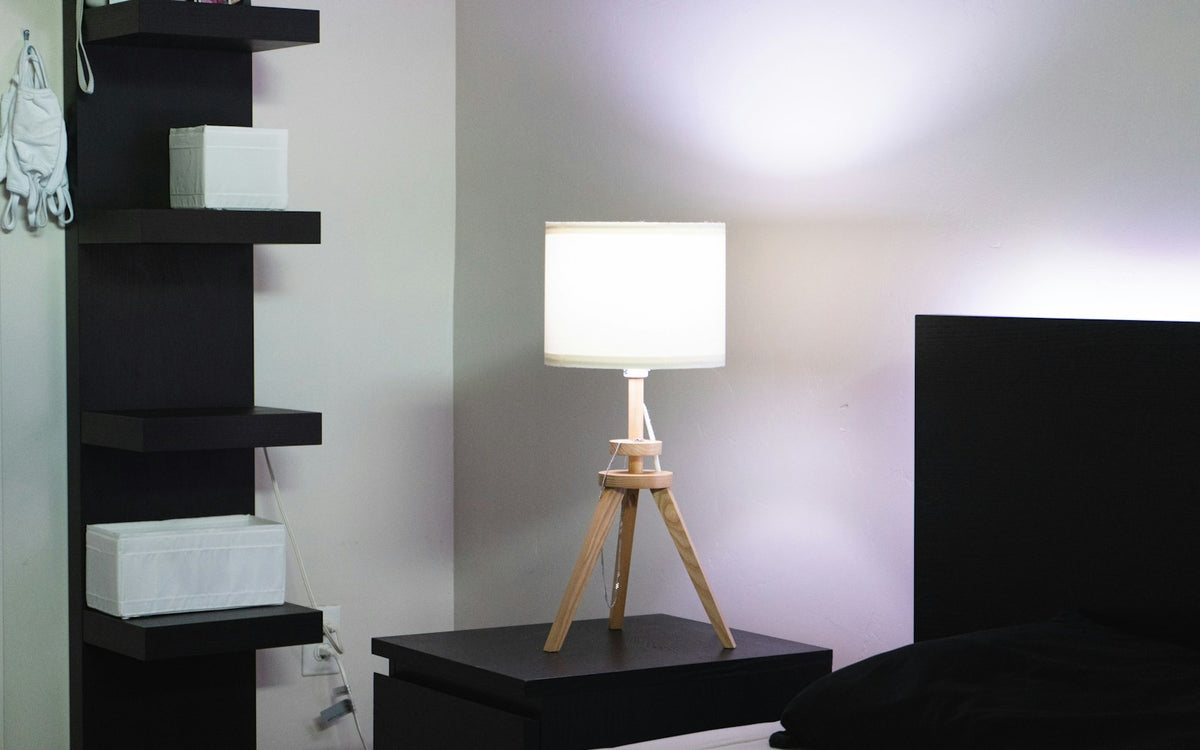
An LED light therapy lamp does not burn out the way a bulb does; its output fades slowly, and manufacturers quote an "L70" life, the number of hours until brightness has dropped to 70 per cent of new, which for lighting-grade LEDs is typically tens of thousands of hours. At half an hour a day for five months a year, that is decades of winters. The parts that wear out first are usually the power supply, the switch and the stand, and the thing most likely to shorten a lamp's life is how it is cleaned and stored, not how much it is used.
How is LED life measured?
Not by failure. A traditional filament bulb stops working; an LED gets gradually dimmer. So the lighting industry, following guidance set out by the US Department of Energy, quotes lifetime as lumen maintenance: the projected number of operating hours until light output has fallen to a set fraction of its initial value, most often 70 per cent, written L70. The Department of Energy's fact sheet notes that quoted L70 figures range from under 10,000 hours to more than 100,000, depending on the type and quality of the product, and that the figures are projections from accelerated testing rather than measurements of lamps that have actually run that long.
The arithmetic for a light therapy lamp is generous. A 30-minute session every day from October to March is about 90 hours a year. Even a modest 25,000-hour L70 rating would take more than 250 winters to reach. In practice the LEDs will outlast everything else in the box.
What does 70 per cent mean for a 10,000 lux lamp?
That a lamp rated at 10,000 lux at its stated distance would, at the end of its L70 life, deliver about 7,000 lux at that distance. Because that point is so far off for a lamp used half an hour a day, the practical answer is that the dose does not change meaningfully across the years you own it. Fluorescent light boxes, the older technology, were different: tubes lost output noticeably over a few thousand hours and were designed to be replaced. LED vs fluorescent light therapy lamps covers the change.
What actually wears out?
| Part | Typical concern | What helps |
|---|---|---|
| LEDs | Very slow dimming over tens of thousands of hours | Nothing needed; keep vents clear so they run cool |
| Power supply or adapter | The most common failure in any mains electronics | Keep it off the floor, away from radiators; do not coil the cable tightly |
| Switch, buttons, timer | Mechanical wear | Press, do not stab; keep dry |
| Diffuser panel | Scratches and cloudiness from harsh cleaning | Soft dry or barely damp cloth only |
| Stand or hinge | Loosening with repeated adjustment | Adjust with two hands; do not force past the stop |
| Cable | Fraying at the plug or the lamp end | Unplug by the plug, not the cable |
How should you clean a light therapy lamp?
- Switch it off and unplug it.
- Wipe the panel with a soft, dry microfibre cloth. For marks, dampen the cloth slightly with water; never spray anything onto the lamp.
- Avoid glass cleaner, alcohol wipes, kitchen sprays and anything abrasive, all of which can cloud or craze a plastic diffuser and dull the light.
- Dust the vents at the back with the dry cloth or a soft brush; blocked vents make the electronics run warmer.
- Let it dry fully before plugging it back in.
Kitchens are the most common place for a lamp and the hardest on it: cooking grease builds a film on the panel that scatters light. A weekly wipe in winter keeps the dose where it should be.
How should you store it over the summer?
Clean and dry, out of direct sunlight, somewhere it will not be crushed, with the cable loosely looped rather than wound tight around the stand. The original box is ideal. A compact lamp with a folding stand, such as DAYARC Mini, whose stand doubles as its cover, can simply be closed and put in a drawer. Leaving a full-size lamp on the table all year is also fine, and it makes the autumn restart more likely to happen. When should you stop using a SAD lamp in spring? covers the timing.
What about the warranty?
Check what it covers and for how long before you buy. DAYARC Rise and Mini carry a one-year warranty covering manufacturing defects, which is the ordinary position for small electricals in the UK; accidental damage, misuse and normal wear are not covered, by us or by most manufacturers. Under UK consumer law you also have rights against the retailer if goods are faulty, separate from any warranty. DAYARC delivery, returns and warranty in the UK explains how the two differ.
Frequently asked questions
Do I ever need to replace the LEDs?
Not in normal use. If a lamp fails, it is almost always the power supply or a connection rather than the LEDs, and the fix is a repair or replacement under warranty rather than new LEDs.
Will my lamp get dimmer over the years?
Fractionally, and far too slowly to notice at half an hour a day. A dirty panel makes a bigger difference than a decade of ageing.
Is it safe to leave it plugged in?
Follow the manufacturer's instructions. Switching off at the lamp is fine day to day; unplug it for cleaning, and unplug it if you are away for weeks.
Does running it cost much?
Very little; LED lamps draw far less power than the fluorescent boxes they replaced. How much does a light therapy lamp cost to run in the UK? does the sums.
Where does this leave you?
A well-made LED lamp, wiped with a dry cloth and stored in its box, should see out many winters, and the light it gives will be as good in the last of them as in the first. If you are choosing one, how to choose a SAD lamp in the UK lists what to look for, and the choose your light page compares DAYARC Rise and Mini.
About DAYARC
DAYARC is a new UK circadian rhythm startup. We make two bright-light lamps for the morning: DAYARC Rise (£199), a full-size lamp rated at 10,000 lux at approximately 30–36 cm, with four brightness settings, a 15 to 60-minute timer and adjustable height and angle; and DAYARC Mini (£49.99), a compact lamp rated at 10,000 lux at approximately 25 cm, with a folding stand that doubles as its cover. Both use UV-free LEDs and run from the mains. We publish plain specifications with the measuring distance, we do not make medical claims, and we write the DAYARC Journal to help people build a simple morning light routine around their own daily rhythm. You can read more about how we think on our approach page or compare the two lamps.
This article is general information, not medical advice. Check with a GP or qualified healthcare professional before using bright light if you have an eye condition, a condition affected by bright light such as bipolar disorder, or take medicines that increase your sensitivity to light. If you have persistent low mood or think you may have depression, speak to your GP. If you need urgent help, contact NHS 111, or call 999 in an emergency.