You cannot check a SAD lamp's brightness with a phone app: when researchers tested 14 apps on nine smartphones against a calibrated meter, the readings were "extremely variable", and a 2025 study found uncalibrated phones reading 28 to 38 per cent high. What you can check is whether your lamp states a lux figure at a stated distance, whether you are actually sitting at that distance, and whether the panel is large enough that a small movement does not halve the dose. Those three things matter more than any reading.
What does "bright enough" mean for a SAD lamp?
The research protocol for seasonal affective disorder is 10,000 lux at the eye for about 30 minutes soon after waking, a figure that comes from a 1990 trial in which 30 minutes at 10,000 lux matched two hours at 2,500 lux. Lux measures light arriving at a surface, and it falls away steeply with distance from a lamp. A lamp is therefore "bright enough" only in combination with a distance: 10,000 lux at 30 cm, say, which becomes something like a quarter of that at 60 cm. A lamp described as "10,000 lux" with no distance has not told you anything. What does 10,000 lux actually mean? goes through the numbers.
Why are phone light meters unreliable?
Phones have a light sensor, but it is there to adjust screen brightness, not to measure illuminance. It sits behind tinted glass, points in one fixed direction, has a narrow field of view and is not calibrated against any standard. Apps read that sensor and present a number, and the number is only as good as the sensor.
Two studies have tested this properly. In a 2017 study presented at the Applied Human Factors and Ergonomics conference, Cerqueira, Carvalho and Melo tested 14 apps on nine smartphones at 300, 500, 750 and 1,000 lux under three colour temperatures. The results, in their words, revealed "extremely variable and sometimes large deviations" from the reference, and they concluded that smartphones were not appropriate for occupational lighting assessments. A 2025 paper in Ergonomics in Design by Rodriguez and colleagues found uncalibrated smartphone readings between 28 and 38 per cent above the true value across the 20 to 1,000 lux range, and suggested that a phone could stand in for a low-end meter only after calibration against a real one. Neither study went anywhere near 10,000 lux, where the sensors are further outside their design range.
| Method | What it tells you | Reliability |
|---|---|---|
| Phone light-meter app | A number that may be tens of per cent out, in either direction | Poor; not calibrated, not designed for it |
| Handheld lux meter (a few tens of pounds) | Illuminance at the sensor, usually within a few per cent | Good, if held where your eyes are and facing the lamp |
| Manufacturer's rating with distance | The lux at a stated distance under test conditions | Good, if the distance is stated and you sit at it |
| Rating without a distance | Very little | Treat with suspicion |
How do you check a lamp without a meter?
- Find the distance. Look for the lux figure and the distance it was measured at in the specifications. DAYARC Rise is rated at 10,000 lux at approximately 30–36 cm and DAYARC Mini at approximately 25 cm. If a lamp gives no distance, assume the figure was taken very close to the panel.
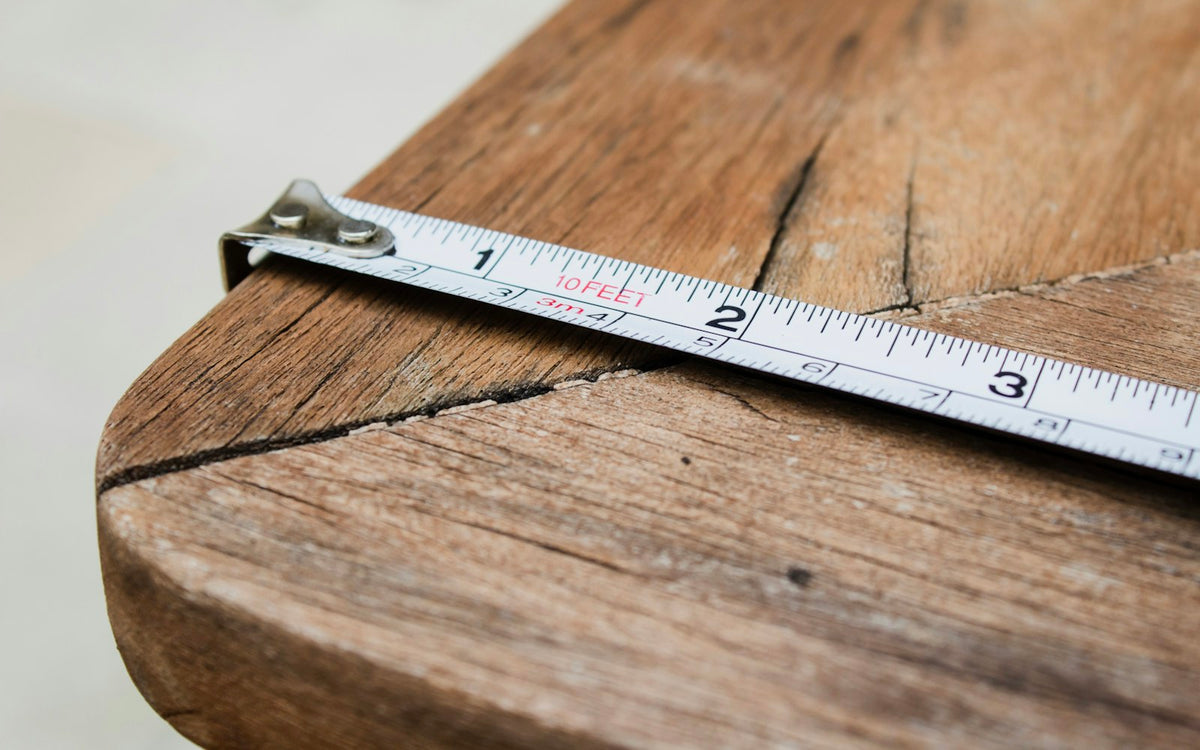
- Measure your seat. A tape measure from the panel to your eyes, once, and then a mark on the table, a placemat or a book that puts you in the right spot every morning. How far should you sit from a light therapy lamp? covers the set-up.
- Check the panel size. A large panel lights your face evenly and forgives a few centimetres of movement; a very small one has to be close and delivers a very different dose if you lean back. Why panel size matters in a light therapy lamp explains.
- Check the angle. The rating assumes the panel faces you. Slightly above eye level and a little to one side is the standard position; well off to the side, or pointing at the ceiling, cuts the light reaching your eyes.
- Check the setting. If the lamp has brightness levels, the rating applies to the highest one. A lower setting is fine for comfort, but it is a lower dose.
If you do buy a lux meter
A basic handheld meter costs a few tens of pounds and is far more trustworthy than an app. Hold the sensor where your eyes would be, facing the panel, with the room lights as they would be during a session, and read it at the distance you actually use. Expect the figure to be a little different from the manufacturer's, because test conditions are never quite the same as a kitchen, and expect it to change a lot if you move the meter 10 cm forwards or back. That second observation is the useful one: it shows you why the distance matters.
Frequently asked questions
My app says my lamp is 3,000 lux. Is it faulty?
Probably not; the app is the likelier fault, and apps have not been tested at anything like 10,000 lux. Measure the distance and check the setting before worrying about the lamp.
Is brighter always better?
No. The 1990 trial found intensity and duration trade off within the range tested, and sitting closer than the rated distance adds glare and headaches without adding benefit. The NHS advises following the manufacturer's instructions.
Does the lux drop as the lamp ages?
Slowly, with LEDs, over many years of use; how long does a light therapy lamp last? explains the L70 figure manufacturers use.
Can I feel whether it is bright enough?
Not reliably. The eye adapts quickly, which is why a 50 lux living room feels bright after a minute. Trust the distance, not the impression.
Where does this leave you?
Put the phone down and pick up a tape measure. A lamp that states its lux at a stated distance, used at that distance on its rated setting with the panel facing you, is bright enough by definition; anything else is guesswork. How to choose a SAD lamp in the UK lists the specifications to look for, and the choose your light page shows DAYARC Rise and Mini with their measuring distances.
About DAYARC
DAYARC is a new UK circadian rhythm startup. We make two bright-light lamps for the morning: DAYARC Rise (£199), a full-size lamp rated at 10,000 lux at approximately 30–36 cm, with four brightness settings, a 15 to 60-minute timer and adjustable height and angle; and DAYARC Mini (£49.99), a compact lamp rated at 10,000 lux at approximately 25 cm, with a folding stand that doubles as its cover. Both use UV-free LEDs and run from the mains. We publish plain specifications with the measuring distance, we do not make medical claims, and we write the DAYARC Journal to help people build a simple morning light routine around their own daily rhythm. You can read more about how we think on our approach page or compare the two lamps.
This article is general information, not medical advice. Check with a GP or qualified healthcare professional before using bright light if you have an eye condition, a condition affected by bright light such as bipolar disorder, or take medicines that increase your sensitivity to light. If you have persistent low mood or think you may have depression, speak to your GP. If you need urgent help, contact NHS 111, or call 999 in an emergency.
Sources
- Cerqueira D., Carvalho F. and Melo R. B. (2018). Is It Smart to Use Smartphones to Measure Illuminance for Occupational Health and Safety Purposes? Advances in Safety Management and Human Factors (AHFE 2017), Springer, 258–268
- Rodriguez R. G., Paviglianiti V., Dumit C. and Pattini A. (2025). Dos & Don'ts in Measuring Illuminance With Smartphones. Ergonomics in Design, 33(3), 126–134
- Terman J. S. et al. (1990). Efficacy of brief, intense light exposure for treatment of winter depression. Psychopharmacology Bulletin, 26(1), 3–11
- NHS: Seasonal affective disorder (SAD)