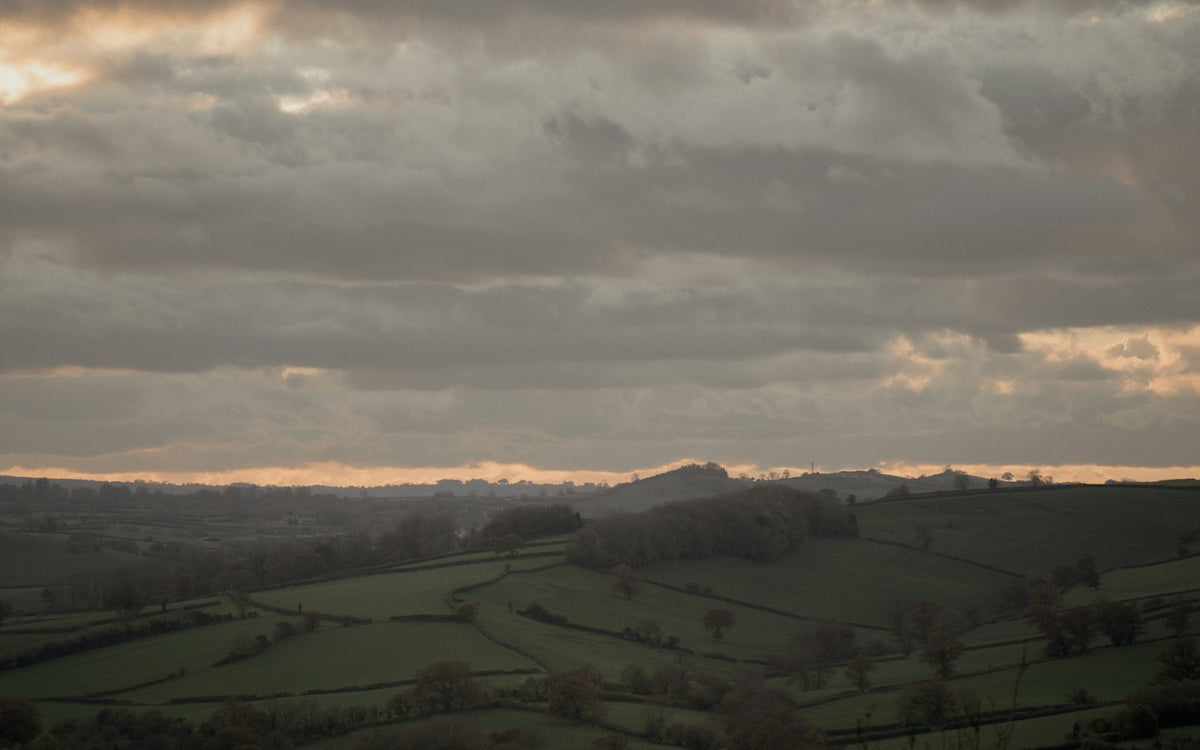
An overcast day is around 1,000 lux outdoors, a very dark, heavily overcast day around 100 lux, and a clear day 10,000 to 25,000 lux in the shade and 32,000 to 100,000 lux in direct sun. A lit office is 320 to 500 lux and a living room can be as low as 50. So even a grey British morning is brighter than almost any room in the house, and a SAD lamp rated at 10,000 lux at its stated distance is not "as bright as the sun"; it is roughly a clear day in the shade, delivered at the breakfast table.
What is lux?
Lux measures how much light lands on a surface. It is not the brightness of a bulb (that is lumens) and it is not how bright something looks (the eye adapts, which is why a 50 lux living room feels perfectly bright once you are in it). Because lux is measured at a surface, the number depends on distance: move away from a lamp and the lux falls quickly, which is why a light therapy lamp's rating is meaningless without the distance it was measured at. What does 10,000 lux actually mean? goes through the arithmetic.
How bright is daylight, indoors and out?
The reference values below are the widely used ones collected in the Wikipedia article on lux; the indoor work figures are the Health and Safety Executive's recommended averages from its guidance "Lighting at work".
| Situation | Typical illuminance |
|---|---|
| Direct sunlight, clear day | 32,000–100,000 lux |
| Full daylight, not in direct sun | 10,000–25,000 lux |
| Overcast day | About 1,000 lux |
| Sunrise or sunset on a clear day | About 400 lux |
| Very dark overcast day | About 100 lux |
| Office lighting | 320–500 lux |
| HSE recommended average for office work | 200 lux (500 lux for fine detail) |
| Family living room lighting | About 50 lux |
| Full moon on a clear night | 0.05–0.3 lux |
Two features of that table matter for winter. First, the gap between outdoors and indoors is enormous: a dull day outside is still two to twenty times brighter than a lit room, which is why a short walk counts for so much. Second, the gap between a clear day and a grey one is also large, and the UK supplies a lot of grey: the Met Office's 1991–2020 averages give the country as a whole 42.7 hours of sunshine in December, about an hour and twenty minutes a day. Which is the darkest month in the UK? has the full year.
How does a SAD lamp compare?
A lamp rated at 10,000 lux at 30 cm delivers, at 30 cm, roughly what you would get sitting outdoors in the shade on a clear day. Sit at 60 cm and a panel delivers something like a quarter of its rated figure; sit across the room and it is a bright reading lamp. The figure was chosen because, in a 1990 trial, 30 minutes at 10,000 lux matched the effect of two hours at 2,500 lux, not because it imitates the sun; where does the 10,000 lux standard come from? tells that story. DAYARC Rise is rated at 10,000 lux at approximately 30–36 cm and DAYARC Mini at approximately 25 cm.
The comparison also explains why "just sit by the window" is weaker than it sounds. Light through glass, at a desk a metre or two back from the window, on a grey November morning, is often a few hundred lux at the eye. Does daylight through a window count as morning light? measures it out.
Why does the body clock care about these numbers?
Because the cells in the retina that report light levels to the body clock respond to intensity, timing and duration together. A few hundred lux for a long time and ten thousand lux for half an hour are different doses, and the research on seasonal affective disorder, summarised in do SAD lamps work?, used the second. Morning light of any brightness helps set the clock; the question in a British winter is whether you can get enough of it before work, and the table above says the answer indoors is usually no.
Frequently asked questions
Is a cloudy day enough light for the body clock?
An overcast day outdoors, at around 1,000 lux, is more than any ordinary room and is worth having. Whether it is "enough" depends on how long you are out and when. Twenty minutes outside at 8 am does more for the clock than the same twenty minutes at 2 pm.
How bright is my phone or laptop screen?
At normal viewing distance, typically somewhere between a few tens and a couple of hundred lux at the eye, depending on brightness and how close you hold it. That is low in the morning and high enough to matter late at night; evening screens and winter sleep explains why.
Can I measure lux myself?
With a proper lux meter, yes. Phone apps are unreliable; is my SAD lamp bright enough? explains what the studies found when they tested them.
Is 10,000 lux dangerous?
It is less than a bright day outdoors, and a UV-free lamp used at the rated distance and as directed has a long safety record in trials. Glare and headaches can happen if you sit too close; the NHS advises checking with a GP first if you have an eye condition or take medicines that increase light sensitivity. Are SAD lamps safe? has the detail.
Where does this leave you?
With a sense of scale. A grey day is far brighter than your kitchen; a clear day is far brighter than a lamp; a lamp at its rated distance is far brighter than a window seat; and none of the indoor options come close to being outside. If mornings outdoors are not on offer before work, a lamp is the way to get a daylight-sized dose at the table. How far should you sit from a light therapy lamp? covers the distance, and the choose your light page compares DAYARC Rise and Mini.
About DAYARC
DAYARC is a new UK circadian rhythm startup. We make two bright-light lamps for the morning: DAYARC Rise (£199), a full-size lamp rated at 10,000 lux at approximately 30–36 cm, with four brightness settings, a 15 to 60-minute timer and adjustable height and angle; and DAYARC Mini (£49.99), a compact lamp rated at 10,000 lux at approximately 25 cm, with a folding stand that doubles as its cover. Both use UV-free LEDs and run from the mains. We publish plain specifications with the measuring distance, we do not make medical claims, and we write the DAYARC Journal to help people build a simple morning light routine around their own daily rhythm. You can read more about how we think on our approach page or compare the two lamps.
This article is general information, not medical advice. Check with a GP or qualified healthcare professional before using bright light if you have an eye condition, a condition affected by bright light such as bipolar disorder, or take medicines that increase your sensitivity to light. If you have persistent low mood or think you may have depression, speak to your GP. If you need urgent help, contact NHS 111, or call 999 in an emergency.
Sources
- Wikipedia: Lux (illuminance reference values)
- Health and Safety Executive: Lighting at work (HSG38)
- Met Office: UK and regional climate series (sunshine, 1991–2020 averages)
- Terman J. S. et al. (1990). Efficacy of brief, intense light exposure for treatment of winter depression. Psychopharmacology Bulletin, 26(1), 3–11
- NHS: Seasonal affective disorder (SAD)