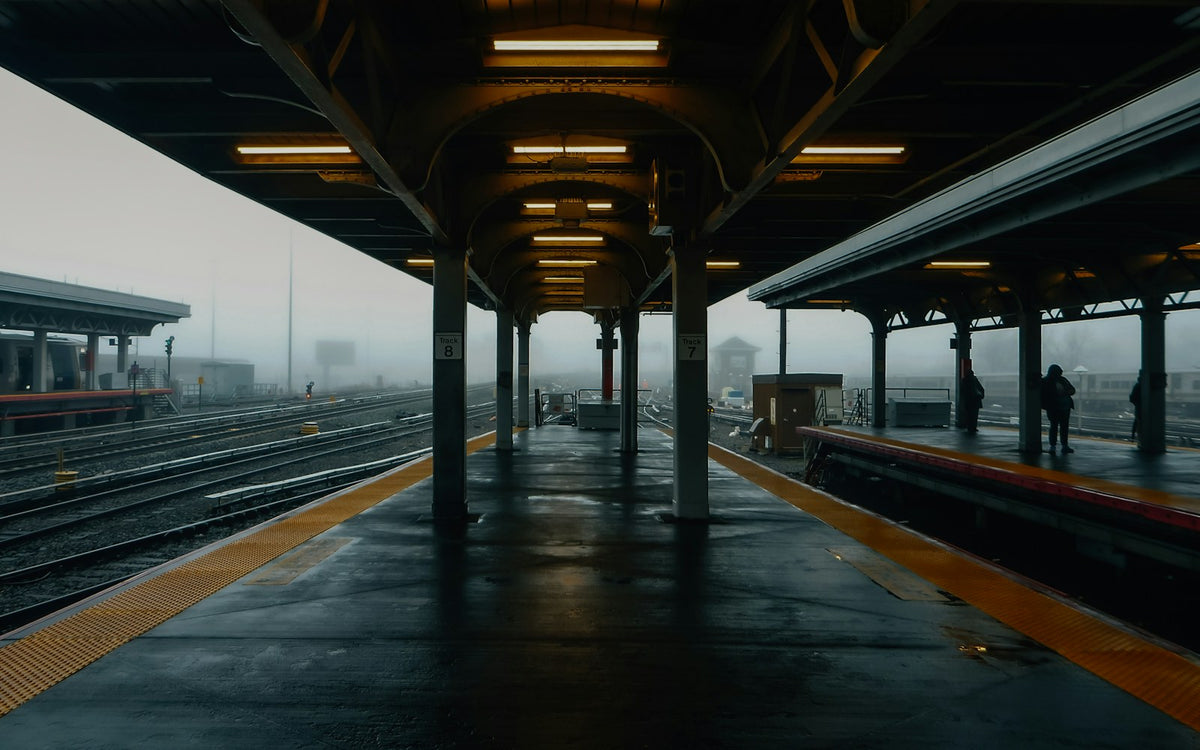
If you leave the house at 7 am, your commute is in the dark from the start of October to the third week of February in London, and from mid-September to early March in Glasgow and Belfast, with only the south getting a short reprieve after the clocks go back. The morning journey that used to give you a dose of daylight gives you a lit carriage instead, which is one reason winter commuting is so draining. The fix is not on the train; it is the twenty minutes before you leave, plus a few habits on the way.
How dark is the 7 am commute?
| City | Sunrise still after 7 am on | Sunrise on 21 December | Last dark 7 am start in spring |
|---|---|---|---|
| London | 1–24 October, then 5 November onwards | 08:04 | 22 February |
| Cardiff | 23 September onwards (three-day gap after the clocks change) | 08:16 | 28 February |
| Manchester | 25 September onwards (three-day gap after the clocks change) | 08:23 | 28 February |
| Newcastle | 27 September onwards (two-day gap after the clocks change) | 08:29 | 27 February |
| Glasgow | 21 September onwards, without a break | 08:46 | 4 March |
| Belfast | 17 September onwards, without a break | 08:44 | 6 March |
The times are calculated from standard astronomical formulae for the 2026–27 winter. The clocks going back on 25 October 2026 gives the south a brief reprieve of pre-7 am sunrises before the shortening days take them away again: in London it runs from 25 October to 4 November, in Cardiff and Manchester it lasts three days, and in Glasgow and Belfast the sun is already rising after 7 am on the morning the clocks change. Winter sunrise times across the UK has the full tables.
Why does a dark commute matter?
Because the first hour after waking is when light does most to set the body clock, and for a commuter that hour is spent under a bathroom bulb, a station canopy and a carriage ceiling. A lit train is bright enough to read by, perhaps a few hundred lux, and nothing like the 10,000 lux and more of a clear morning outdoors. How bright is a cloudy day in the UK? puts the numbers side by side. The result over weeks is a clock that drifts later, so that the alarm feels earlier and the evening feels more awake than it should; why am I so tired on dark winter mornings? describes the pattern.
What can you do before you leave?
This is the slot that works. A bright lamp at breakfast, 10,000 lux at its rated distance for 20 to 30 minutes, is the protocol from the seasonal affective disorder research, and it fits inside the time most people already spend with coffee and the news. If you have twenty minutes, use twenty; the trials used about thirty, but a consistent twenty beats an occasional thirty. Put the lamp where you eat, at the rated distance, slightly above eye level and a little to one side, and use it seven days a week including the weekend, when the clock is most likely to drift. How to build a morning routine around a light therapy lamp covers the set-up; the NHS advises choosing a UV-free lamp and speaking to a GP first if you have an eye condition or take medicines that increase light sensitivity.
What can you do on the way?
- Get off a stop early once the sun is up. From mid-January in the south, the walk at the far end of the journey is in daylight even when the start was not, and an overcast morning outdoors is still around 1,000 lux, several times any office.
- Sit by a window, on the brighter side. Once the sun is up, daylight through the glass is many times brighter than the carriage lighting; in the dark it makes no difference, so save the elbowing for February.
- Take the lunchtime walk seriously. Midday in December is the brightest part of the day, and the only part most office workers can spend outside. Twenty minutes at noon does not set the clock like morning light, but it is the largest dose of daylight available to a commuter and worth having.
- Do not use a bright lamp on the evening journey. Bright light after dark pushes the body clock later; the evening train is for dim screens and a book. Evening screens and winter sleep explains why.
What about a lamp at the office?
A compact lamp on the desk is a reasonable second best for people who cannot fit a session in at home, provided it is used early in the working day rather than mid-afternoon, and provided colleagues are not sitting in its beam. DAYARC Mini is rated at 10,000 lux at approximately 25 cm, folds into its own cover and fits a bag; using a SAD lamp at work covers the etiquette and the timing, and portable light therapy lamps: what to check before you buy covers the choice. A 9 am desk session is later than ideal but far better than none.
Frequently asked questions
Does the light in the carriage count for anything?
Very little for the body clock. It is bright enough to see and read by, but it is a small fraction of daylight and arrives at eye level from above rather than in front of you.
I drive to work. Is it different?
Not much: headlights and dashboard lighting are dim, and you cannot use a lamp while driving. The before-you-leave session is the one that works, and a walk from a car park in daylight later in the winter is worth more than it looks.
Can I use a lamp on the train?
Some people do with a small battery-powered device, but a mains lamp is impractical and a bright panel in a shared carriage is unfair on everyone else. Breakfast is the better slot.
What if I start work at 6 am?
Then the morning session may need to be at 5 am, which is still within an hour of waking and still the right time for the body clock. Light therapy for shift workers covers early and rotating starts.
Where does this leave you?
With a winter that is dark at both ends of the working day for four or five months, and a simple response: twenty minutes of bright light at the breakfast table before you leave, daylight at lunchtime, dim evenings on the way home. When to start using a SAD lamp in the UK works through the calendar, and the choose your light page compares DAYARC Rise for the kitchen table with DAYARC Mini for the desk.
About DAYARC
DAYARC is a new UK circadian rhythm startup. We make two bright-light lamps for the morning: DAYARC Rise (£199), a full-size lamp rated at 10,000 lux at approximately 30–36 cm, with four brightness settings, a 15 to 60-minute timer and adjustable height and angle; and DAYARC Mini (£49.99), a compact lamp rated at 10,000 lux at approximately 25 cm, with a folding stand that doubles as its cover. Both use UV-free LEDs and run from the mains. We publish plain specifications with the measuring distance, we do not make medical claims, and we write the DAYARC Journal to help people build a simple morning light routine around their own daily rhythm. You can read more about how we think on our approach page or compare the two lamps.
This article is general information, not medical advice. Check with a GP or qualified healthcare professional before using bright light if you have an eye condition, a condition affected by bright light such as bipolar disorder, or take medicines that increase your sensitivity to light. If you have persistent low mood or think you may have depression, speak to your GP. If you need urgent help, contact NHS 111, or call 999 in an emergency.